What to Eat in Tuyen Quang: A Local's Food Guide
Tuyen Quang's food scene centers on river fish, sticky rice, and dishes shaped by its mountain geography. Here's where locals actually eat—and what costs what.

Tuyen Quang sits where the Lo and Chay rivers meet in the far north, and that geography shows up on every plate. This is not a culinary pilgrimage destination like Hue or Hanoi, but it's not a food wasteland either. The cooking here is straightforward: river fish dominates, sticky rice is the starch, and dishes tend toward salty and funky—fermented fish, preserved vegetables, bone broth that's been simmering since dawn.
If you're passing through or spending a night, know what to order, where the locals queue, and what to avoid if you want to eat well instead of expensive badly.
River fish and broth
The signature move in Tuyen Quang is "ca kho to"—fish caramelized in clay pot with fish sauce, sugar, and garlic until it's dark, sticky, and intense. Order it at a market stall or small "com tam" shop and you'll pay 40,000–60,000 VND for a plate with rice. The fish is usually small, whole, bony—you eat it all, head included. It tastes like umami and burnt sugar.
Com tam restaurants (rice-with-side-dishes places) line the streets near Tuyen Quang's central market. These are working-person spots: plastic chairs, clattering ladles, pots visible from the street. Most are open 11 a.m.–1 p.m. and 5–7 p.m. A full meal—rice, one protein, maybe a soup—runs 50,000–80,000 VND. Fish is cheaper than pork here; pork and chicken cost more.
For broth, try "canh ca"—fish soup with bitter melon or vegetables. It's soupy, bone-forward, lightly salted, nothing fancy. Locals eat it for lunch with rice. A bowl costs 30,000–50,000 VND at market stalls.
Sticky rice and preserved vegetables
Sticky rice ("xoi") is everywhere in Tuyen Quang province—more so than in the lowland Delta. You'll find it cooked in bamboo tubes, sold from carts at 15,000–25,000 VND per serving. Pair it with preserved pork, salted egg, or just eat it plain with soy.
Preserved vegetables—pickled mustard, salted bamboo shoot, fermented shrimp paste—are not optional condiments here; they're main-dish anchors. "Dua chua" (sour pickled vegetables) shows up in almost every stall soup. It's salty, funky, intentionally high-flavor. If you don't like fermented funk, Tuyen Quang's food will feel harsh.
Markets: where to eat, what to avoid
Tuyen Quang Central Market (near the river, downtown) opens 5 a.m.–10 a.m. for breakfast and 10 a.m.–2 p.m. for lunch. The food section—wet stalls, noodle stands, grilled-meat carts—is genuine local eat. There are no English menus, no tourist prices. Point at what you want, eat standing or on a plastic stool, pay cash. Budget 40,000–70,000 VND per person.
Stalls with long queues at mealtimes are safe bets. Stalls with no one eating at them, or with meat sitting uncovered in heat, skip.
Tourist-trap restaurants are rare here (Tuyen Quang isn't on the backpacker trail like Sapa or Ha Giang), but avoid restaurants with laminated color photos on the wall and English names. Your best meal will come from a place where the owner is also the cook.
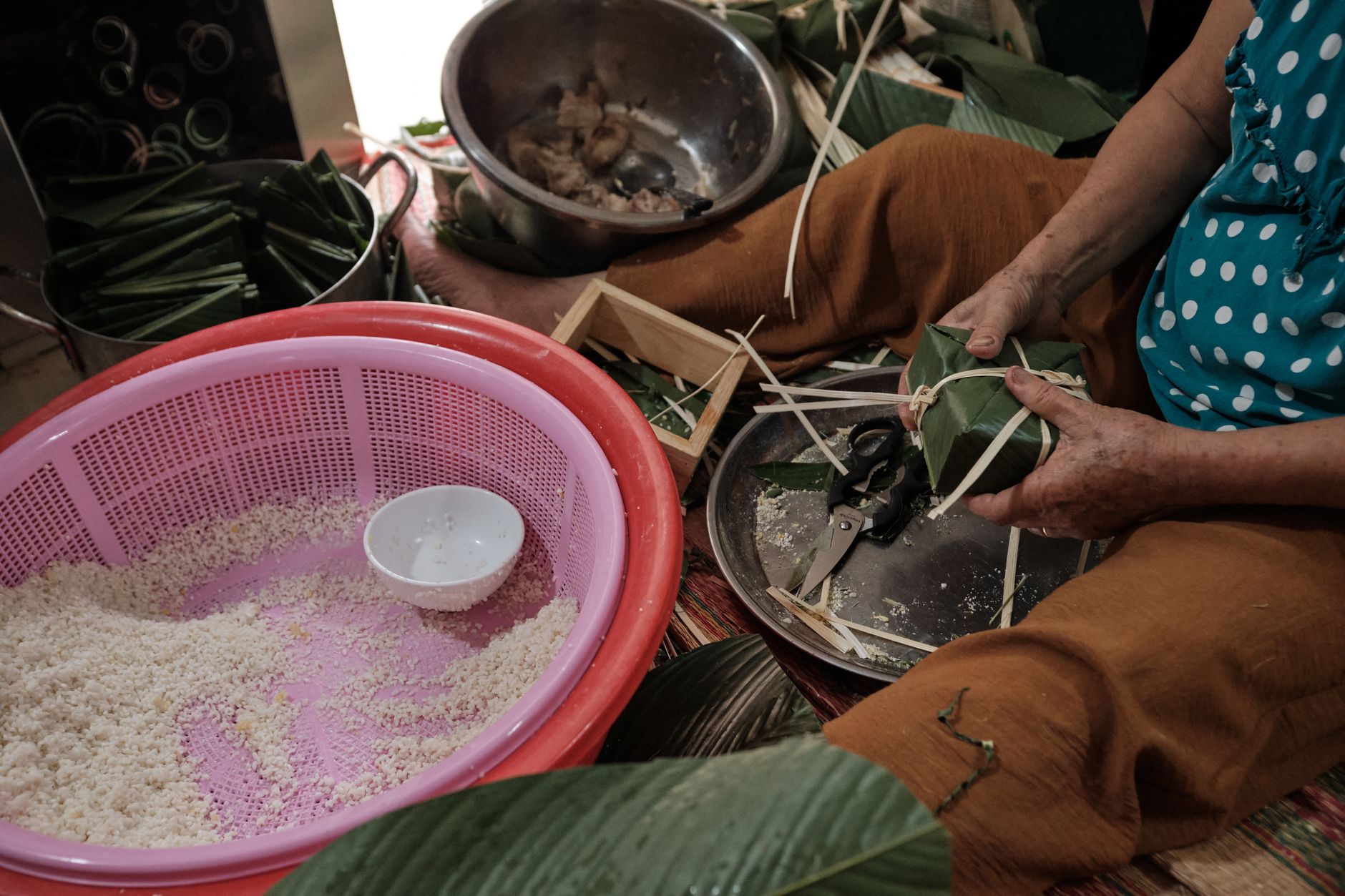
Photo by Nguyen Truong Khang on Pexels
Regional noodle soups
"Bun rieu" (crab-tomato noodle soup) is common in the north and appears in Tuyen Quang. Expect it to be brothy, with bits of crab, pork, and sometimes snails. It's heavier and less refined than Hanoi versions—more home-cooking, less café polish. 35,000–55,000 VND.
"Hu tieu" (pork broth with tapioca noodles) is also present, though less dominant. It's lighter, clearer, and easier on the stomach than bun rieu. Similar price.
"Mi quang" (Quang-style turmeric noodles) is a central Vietnamese dish, not native to Tuyen Quang, but you'll find it in some com tam shops as a variation. It's niche here, so don't expect excellence.
Broken-rice "com tam" (white rice, never sticky, mixed with a protein and a vegetable stew) is everyday food. It's cheap, filling, and unremarkable—which is the point. 50,000–75,000 VND with a side of grilled meat or fish.
Grilled meat and offal
Small "nha hang" (restaurant) spots roast pork belly, chicken, and beef over charcoal in front of the shop. Meat costs 120,000–180,000 VND per plate. It's salty, smoky, and best eaten with rice and a fermented vegetable.
Offal is less of a draw here than in Hanoi, but grilled pork liver ("gan") and intestine ("sach") appear at night stalls. Order if you like organ meat; otherwise, stick to belly and thigh.
Street snacks and breakfast
"Banh mi" (French-influenced sandwich) shops exist but aren't iconic to Tuyen Quang. If you want a handheld breakfast, a banh mi runs 20,000–40,000 VND. The fillings are usually pâté, cold pork, pickled vegetable, cilantro.
"Banh chung" (sticky rice and pork wrapped in leaf, a Tet staple) is seasonal—most common around the Lunar New Year—but some markets sell it year-round. 15,000–30,000 VND per block.
"Xoi man" (savory sticky rice with pork, shallot, and beans) is breakfast carb-loading and costs 20,000–35,000 VND.
Tea and coffee are present but not as ritualized as in larger cities. Vietnamese coffee (dark, sweet, condensed milk) is 15,000–25,000 VND at a cafe. Tea is cheaper and less common as a standalone drink; locals drink it with meals.
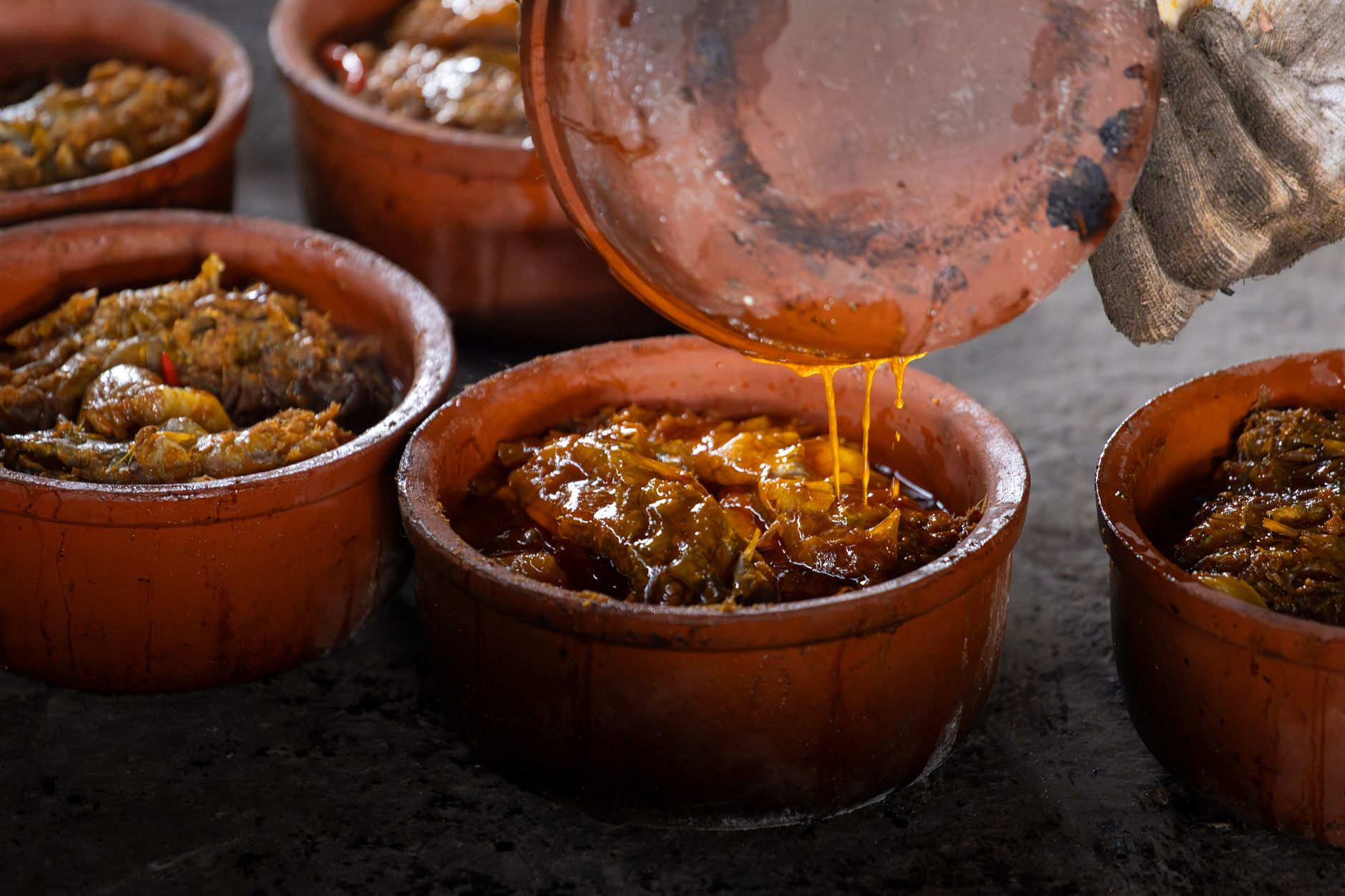
Photo by Hồng Quang Official on Pexels
Fruit and drinks
Summer fruit (mango, star fruit, guava) is available at markets and street vendors—cheap, 10,000–30,000 VND per kilo depending on season and type. Eat fresh, peel it yourself, or buy pre-cut from the market if you trust the knife work.
Juice and smoothie "shops" (really carts with a blender) don't exist to the degree they do in cities. Drink bottled water (10,000 VND), sugary soda (10,000 VND), or iced tea from a vendor.
Cost summary
- Market stall meal: 50,000–80,000 VND
- Com tam lunch (rice + protein + veg): 60,000–90,000 VND
- Noodle soup: 35,000–55,000 VND
- Grilled meat plate: 120,000–180,000 VND
- Snack (banh mi, xoi): 20,000–40,000 VND
- Coffee/tea: 15,000–25,000 VND
No meals in Tuyen Quang cost more than 100,000 VND unless you seek out a named restaurant catering to tourists (which barely exist here). Eating like a local is actually cheaper than eating like a visitor.
Practical notes
Tuyen Quang's food is not refined or photogenic. It's salty, fermented, and unapologetic. Markets close early (by 2 p.m.) so eat lunch on local time, not tourist time. Cash only at stalls. Bring small bills—vendors hate large notes and may refuse. If you're sensitive to salt or funk, bring mild snacks from a larger city.
Going to Vietnam? Eat and travel smarter.
Monthly: new dishes, off-the-beaten-path destinations, and itineraries — straight to your inbox. No spam. Unsubscribe anytime.
Join 0 expats. (We just launched.)
More from tuyen-quang
Other articles covering this city.

Tuyen Quang: What to Do — A Traveler's Guide
Tuyen Quang is a quiet northern province often skipped by tourists heading to Sapa or Ha Giang. Here's what's actually worth your time—and what to skip.

When to Visit Tuyen Quang: A Seasonal Guide
Tuyen Quang's cool mountain air and clear skies peak in autumn and early winter. Here's how to choose the right season for river kayaking, trekking, and village life.

Tuyen Quang Province: Mountains, Rivers, and Ethnic Heritage in Northeast Vietnam
Tuyen Quang is a rugged northeastern province where mountains meet the Lo River valley. Home to ethnic minorities and dramatic peaks like Cham Chu, it's a quieter alternative to better-known mountain destinations.
More from Northern Vietnam
Other articles covering the same region.

Hoa Lu Ancient Capital: Vietnam's First Kingdom and How to Visit from Ninh Binh
Hoa Lu was Vietnam's first royal capital, and the two temple complexes that survive are among the most atmospheric historical sites in the north.

Hoan Kiem Lake: The Sword Legend, Ngoc Son Temple, and When to Visit
Hoan Kiem Lake sits at the center of Hanoi's Old Quarter — here's the legend behind it, how to walk it properly, and when the streets actually belong to you.

Lung Cu Flag Tower: Vietnam's Northernmost Point
The drive to Lung Cu Flag Tower takes you to Vietnam's northernmost point at 1,500 metres. It's a half-day trip from Dong Van with a steep climb, mountain views, and nearby Hmong villages.
More in Destinations
More articles from the same category.

Landmark 81 Saigon: Observation Deck, Ice Rink, and Getting There from District 1
Landmark 81 is Vietnam's tallest building and Saigon's most visible skyline anchor. Here's what's actually inside and whether it's worth the trip.

Bitexco Financial Tower: Skydeck, Helipad Bar, and Whether the Ticket Is Worth It
Saigon's most recognizable skyscraper charges 250,000 VND to ride up to the 49th floor — here's what you actually see, and whether you should bother.

Notre Dame Cathedral Saigon: French Colonial Centerpiece in the Heart of HCMC
Saigon's Notre Dame Cathedral has been wrapped in scaffolding for years, but the square in front of it remains one of the best starting points for a colonial-era walking tour of District 1.

Paradise Cave, Quang Binh: The 31km Marble Cave That Beats Phong Nha for Photographers
Paradise Cave runs 31km through Quang Binh's karst and delivers the kind of cathedral-scale formations that Phong Nha's boat tour simply can't match. Here's how to see it properly.

Son Doong Cave: What the $3,000 Oxalis Expedition Actually Includes
Son Doong is the world's largest cave and only one operator is legally allowed to take you inside. Here is what the permit-only expedition covers and whether it is worth it.

Phong Nha Cave: Wet Cave, Dry Cave, and How to Choose
Phong Nha has two main caves worth your time — one you reach by river boat, one on foot. Here's how to pick, what each costs, and when to go.
Comments
Loading…