Tuyen Quang: What to Do — A Traveler's Guide
Tuyen Quang is a quiet northern province often skipped by tourists heading to Sapa or Ha Giang. Here's what's actually worth your time—and what to skip.

Tuyen Quang sits at the junction of the Lo and Chay rivers in northern Vietnam, about 170 km north of Hanoi. It's the kind of place where most travelers don't stop; they drive through toward flashier destinations. That's partly why it's worth visiting. The province has limestone karst scenery, genuine river-town life, and zero tourist crowds. But it also has some real dead weight on the "must-see" list. Here's the honest breakdown.
The Must-Do Sights
Tuyen Quang Hydroelectric Dam
The dam itself—built in the 1980s across the Chay River—is engineered drama. The approach road clings to the river canyon, and from the dam's crest you get a clean view of the reservoir stretching into forested limestone hills. There's a small museum nearby with maps and hydro-power propaganda, but it's forgettable. The real value is 20 minutes of driving around the dam perimeter: the scale of the thing, the water level, the silence. Free. Stop for photos, leave in an hour.
Nho Que River Loop & Viewpoint
If you're driving from Tuyen Quang town south toward Thai Nguyen, the road follows the Nho Que River through one of the province's best corridors: steep karst walls, emerald water, a handful of tiny villages. The best viewpoint is an unmarked pullout about 40 km south of town (ask a local to point it out; GPS coordinates are unreliable). Stand there at late afternoon and you'll see why old French explorers bothered writing about this river. No entrance fee. Bring a camera.
Ham Yen Ancient Marble Pagoda
This temple sits in a carved limestone cave overlooking the Chay River, about 30 km west of Tuyen Quang town. It's roughly 400 years old and genuinely atmospheric—pillars carved from the cave walls, altars stacked with incense, the river echoing below. A monk or caretaker is usually on hand to show you around (donation optional, 50,000–100,000 VND is fair). The road to get there is a mix of paved and pothole-ridden dirt; allow 90 minutes from town. This one is underrated and quiet.
Hidden Gems (If You Have Time)
Na Hang Nature Reserve & Tai Ethnic Villages
Na Hang, about 60 km east of Tuyen Quang town, is a protected forest area inhabited by Tai, Nung, and Dao ethnic minorities. The reserve has trekking trails and homestays, though infrastructure is bare-bones. If you're interested in ethnography over luxury, a 2–3 day homestay in a Tai village here beats sanitized tourist shows elsewhere. Expect basic homestay meals, homestay accommodation (shared bed, shared bathroom), and genuine daily life: farming, weaving, cooking. Organize through a Tuyen Quang guesthouse or via Hanoi-based trekking operators. Cost: 30–50 USD per day including meals and guide.
Tan Trao Historical Complex
About 35 km southwest of Tuyen Quang town, Tan Trao is a former revolutionary base camp with bunkers, meeting halls, and monuments. Historical plaques are in Vietnamese only, and the site feels frozen in 1970s museum time. If you're into Cold War-era infrastructure or national history, it's a quiet, reflective stop. Otherwise, skip. Free entry; 1 hour total.
Outdoor Activities
River Kayaking on the Chay River
Several local guides in town rent kayaks or arrange guided paddles down the Chay. A 3–4 hour morning trip is doable; limestone cliffs, slow current, minimal traffic. Expect to pay 200,000–400,000 VND per person with a guide. The water is coldish year-round. Go in dry season (October–April) for better visibility and water levels.
Cycling the Riverside Roads
The road from Tuyen Quang town to Na Hang and the road along the Nho Que River corridor are both scenic for cycling. Flat to rolling, light traffic, villages every 10–15 km where you can stop for "com tam" (broken-rice lunch) or roadside fruit. Rent a motorbike (100,000–150,000 VND/day) or arrange a guided cycling tour through your hotel. Full-day loop: 50–60 km.
Foraging & Fishing Trips
If you speak Vietnamese or hire a local guide, morning trips into forested areas for bamboo shoots, mushrooms, or wild herbs are possible. Some homestays in Na Hang include this. It's low-key and genuinely rural. Not for everyone, but memorable for travelers who want a day off the main trail.
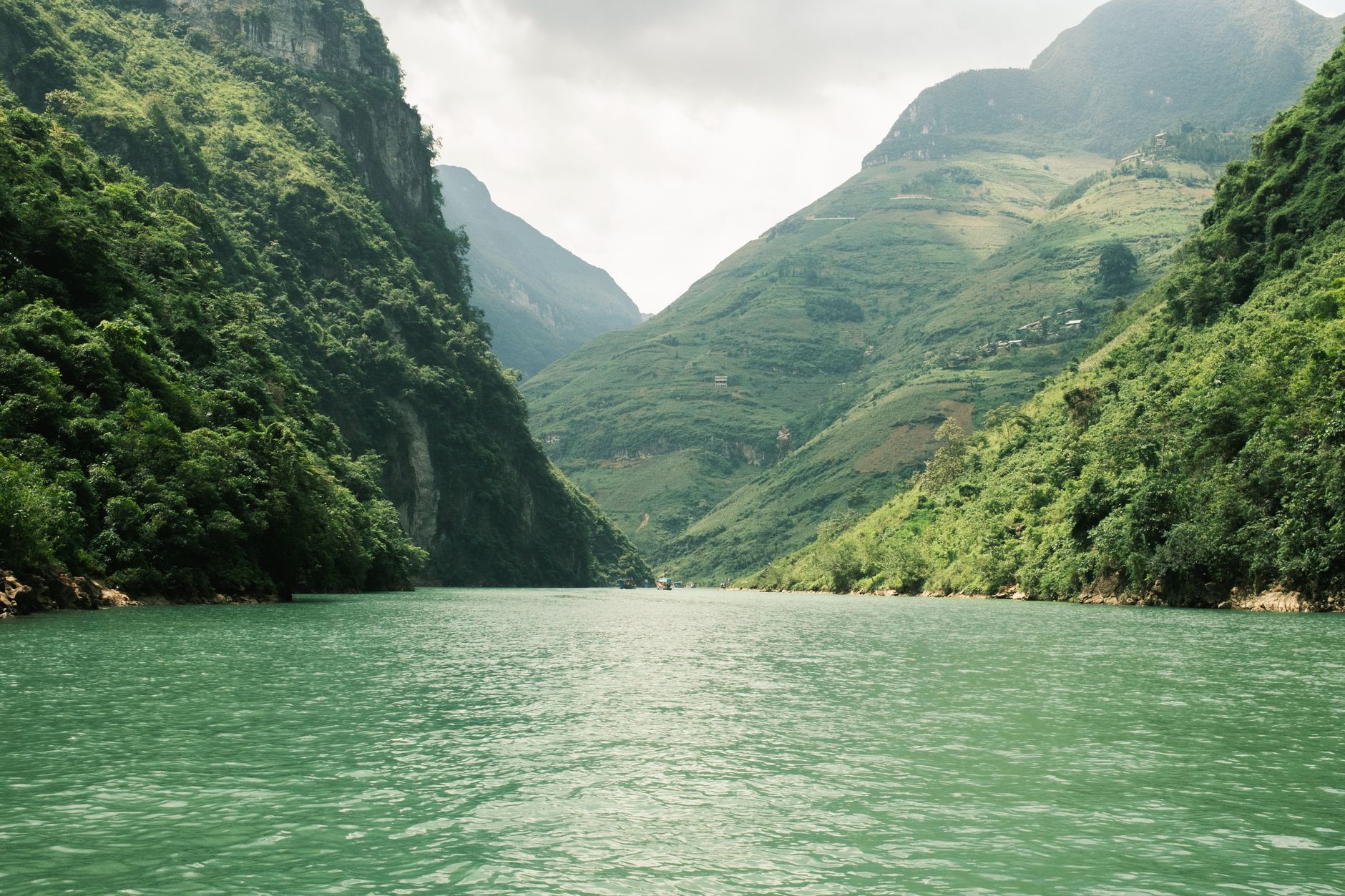
Photo by Quý Nguyễn on Pexels
Cultural Experiences
Ethnic Markets
Tuyen Quang town's morning market (Cho Tuyen Quang) is a standard provincial daily market—no special tourist flavor, just real food and goods. You'll see Tai, Nung, and Kinh people selling vegetables, meat, textiles, and tools. Arrive 6–7 AM, leave by 9 AM before it empties. Free to walk around; respect vendors if you photograph.
Local Food
"Com tam" (broken rice) is a staple here as elsewhere in the north, but Tuyen Quang versions often come with river fish or locally foraged vegetables. Eat at market-side stalls for 30,000–50,000 VND. "Bun cha" is available but less iconic here than in Hanoi. Street coffee—instant powder in condensed milk over ice—is standard and good. Ask for "ca phe sua da."
What to Skip
Tuyen Quang City Monument & Central Park
A bland Soviet-style plaza with a monument to local patriots. No intrinsic interest unless you're collecting socialist statuary. The "park" is a manicured concrete area with no shade. Skip unless you need to use the public bathrooms.
Expensive "Eco-Resort" Traps
A few overpriced resorts on the outskirts of town advertise "eco-tourism" and "adventure packages" with markup prices and mediocre food. Book direct with local guides or homestays instead; you'll spend half as much and eat better.
Multi-Day Tuyen Quang–Only Stays
Unless you're into very slow travel or ethnographic immersion, more than 2 days in Tuyen Quang province becomes repetitive. Most travelers do a day trip from Hanoi (170 km, 3 hours by car) to see the dam and Hàm Yên pagoda, then loop back. Or combine it with 2–3 days in Ha Giang (100 km further north) for a more rounded north-central Vietnam trip.

Photo by Quang Nguyen Vinh on Pexels
Day-Trip Ideas from Tuyen Quang Town
Half-Day: Dam + Pagoda
Morning: Tuyen Quang Dam and museum (1.5 hours). Lunch at a riverside restaurant in town (grilled fish, sticky rice). Afternoon: Hàm Yên Pagoda and surrounding riverside area (1.5 hours). Return to town by 5 PM. Cost: 200,000–300,000 VND in fuel/entry if self-driving; 300,000–500,000 VND with hired driver.
Full Day: River Loop & Villages
Rent a motorbike or hire a driver. Morning: Ride south along the Nho Que River corridor (40 km), stopping at the viewpoint and a village for coffee. Lunch at a roadside stall. Afternoon: Loop back via back roads, stopping at small temples or markets. 80–100 km total. Cost: 100,000–150,000 VND motorbike rental, or 500,000–800,000 VND for a driver + vehicle.
2–3 Days: Na Hang Immersion
Base yourself in a Tai village homestay east of town. Include a morning trek, meals with the family, and a river paddle or foraging walk. Return to Tuyen Quang or push on to Ha Giang. Cost: 60–150 USD total.
Practical Notes
Tuyen Quang town has a handful of basic hotels, decent pho shops, and a few "nha hang" (restaurant) signs, but no international hotel chains or English-language menus. The best base for exploration is a homestay in Na Hang or a modest guesthouse in town; ask your Hanoi hotel to book ahead. October–April is ideal (dry season, clear air). Motorbikes are available to rent; driving standards are loose. If you're not comfortable with northern Vietnamese road chaos, hire a driver through your guesthouse (negotiate a day rate: 500,000–1,000,000 VND). There's no tourist office, but locals in any hotel lobby can point you to guides. Cash (VND) is essential; ATMs in town work but are occasionally unreliable.
Tuyen Quang won't dazzle you with beaches or nightlife, and it's not as jaw-dropping as Ha Giang or Ha Long Bay. But if you like quiet river scenery, genuine rural life, and the satisfaction of an off-the-beaten-path stop, it's time well spent—especially if you're driving north from Hanoi anyway.
Going to Vietnam? Eat and travel smarter.
Monthly: new dishes, off-the-beaten-path destinations, and itineraries — straight to your inbox. No spam. Unsubscribe anytime.
Join 0 expats. (We just launched.)
More from tuyen-quang
Other articles covering this city.

What to Eat in Tuyen Quang: A Local's Food Guide
Tuyen Quang's food scene centers on river fish, sticky rice, and dishes shaped by its mountain geography. Here's where locals actually eat—and what costs what.

When to Visit Tuyen Quang: A Seasonal Guide
Tuyen Quang's cool mountain air and clear skies peak in autumn and early winter. Here's how to choose the right season for river kayaking, trekking, and village life.

Tuyen Quang Province: Mountains, Rivers, and Ethnic Heritage in Northeast Vietnam
Tuyen Quang is a rugged northeastern province where mountains meet the Lo River valley. Home to ethnic minorities and dramatic peaks like Cham Chu, it's a quieter alternative to better-known mountain destinations.
More from Northern Vietnam
Other articles covering the same region.

Hoa Lu Ancient Capital: Vietnam's First Kingdom and How to Visit from Ninh Binh
Hoa Lu was Vietnam's first royal capital, and the two temple complexes that survive are among the most atmospheric historical sites in the north.

Hoan Kiem Lake: The Sword Legend, Ngoc Son Temple, and When to Visit
Hoan Kiem Lake sits at the center of Hanoi's Old Quarter — here's the legend behind it, how to walk it properly, and when the streets actually belong to you.

Lung Cu Flag Tower: Vietnam's Northernmost Point
The drive to Lung Cu Flag Tower takes you to Vietnam's northernmost point at 1,500 metres. It's a half-day trip from Dong Van with a steep climb, mountain views, and nearby Hmong villages.
More in Destinations
More articles from the same category.

Landmark 81 Saigon: Observation Deck, Ice Rink, and Getting There from District 1
Landmark 81 is Vietnam's tallest building and Saigon's most visible skyline anchor. Here's what's actually inside and whether it's worth the trip.

Bitexco Financial Tower: Skydeck, Helipad Bar, and Whether the Ticket Is Worth It
Saigon's most recognizable skyscraper charges 250,000 VND to ride up to the 49th floor — here's what you actually see, and whether you should bother.

Notre Dame Cathedral Saigon: French Colonial Centerpiece in the Heart of HCMC
Saigon's Notre Dame Cathedral has been wrapped in scaffolding for years, but the square in front of it remains one of the best starting points for a colonial-era walking tour of District 1.

Paradise Cave, Quang Binh: The 31km Marble Cave That Beats Phong Nha for Photographers
Paradise Cave runs 31km through Quang Binh's karst and delivers the kind of cathedral-scale formations that Phong Nha's boat tour simply can't match. Here's how to see it properly.

Son Doong Cave: What the $3,000 Oxalis Expedition Actually Includes
Son Doong is the world's largest cave and only one operator is legally allowed to take you inside. Here is what the permit-only expedition covers and whether it is worth it.

Phong Nha Cave: Wet Cave, Dry Cave, and How to Choose
Phong Nha has two main caves worth your time — one you reach by river boat, one on foot. Here's how to pick, what each costs, and when to go.
Comments
Loading…