Where to Stay in Pu Luong: Eco-Lodges and Rice-Terrace Homestays
Pu Luong offers quiet alternatives to Sapa: mid-range eco-lodges, budget homestays in rice terraces, and a landscape still genuinely felt rather than performed for tourists.

Why Pu Luong, and why now
Pu Luong is what Sapa looked like fifteen years ago — rice terraces that haven't been flattened into Instagram stages, villages where homestay owners still seem surprised by your arrival, and a baseline quiet that comes from being off the main tourist train. That's changing: the road from Thanh Hoa town improved in 2022, and word has spread to backpacker forums. But it's still runnable-hours away from Hanoi without the infrastructure overload of Sapa or Ha Giang. If you want to stay in the terraces without the crowds or the premium pricing that comes with them, this is the window.
Mid-range eco-lodges: Pu Luong Retreat and Pu Luong Eco-Garden
Pu Luong Retreat sits on the northwestern edge of the valley near Ban Hieu village. Rooms run 1.8–3.5 million VND (roughly $75–150 USD per night, depending on season and room type). The lodge is built into the slope with stone and timber; it feels designed for the place rather than plunked on it. There's no wifi in rooms by design, which either sounds like a selling point or a deal-breaker depending on who you are. Breakfast is included and leans on what grows locally — rice, greens, eggs from the village. The owner arranges guided walks through the terraces with Muong minority guides who actually live here, not scripts they've memorized. Expect to pay extra (500,000–1 million VND / $20–40 for 4–6 hours) for a walk, but it's worth the specificity.
Pu Luong Eco-Garden, south-facing toward Buon village, is cheaper and more casual. Rooms are 1.4–2.4 million VND ($55–100). It's a homestay-styled operation run by a Vietnamese family who've hosted guests for over a decade, so the rhythm is smooth without feeling corporate. Meals can be arranged (lunch or dinner, around 150,000–250,000 VND / $6–10 per person). The garden itself — mango, lime, herbs — is part of the appeal; you can eat breakfast looking at trees you'll walk past later. Wifi exists but is slow and temperamental, which fits the vibe. No guides on staff, but the family can connect you with locals for walks.
Both lodges sit within the Pu Luong Nature Reserve boundary and have relationships with the local communities, so a cut of what you pay filters back to the villages in some form.
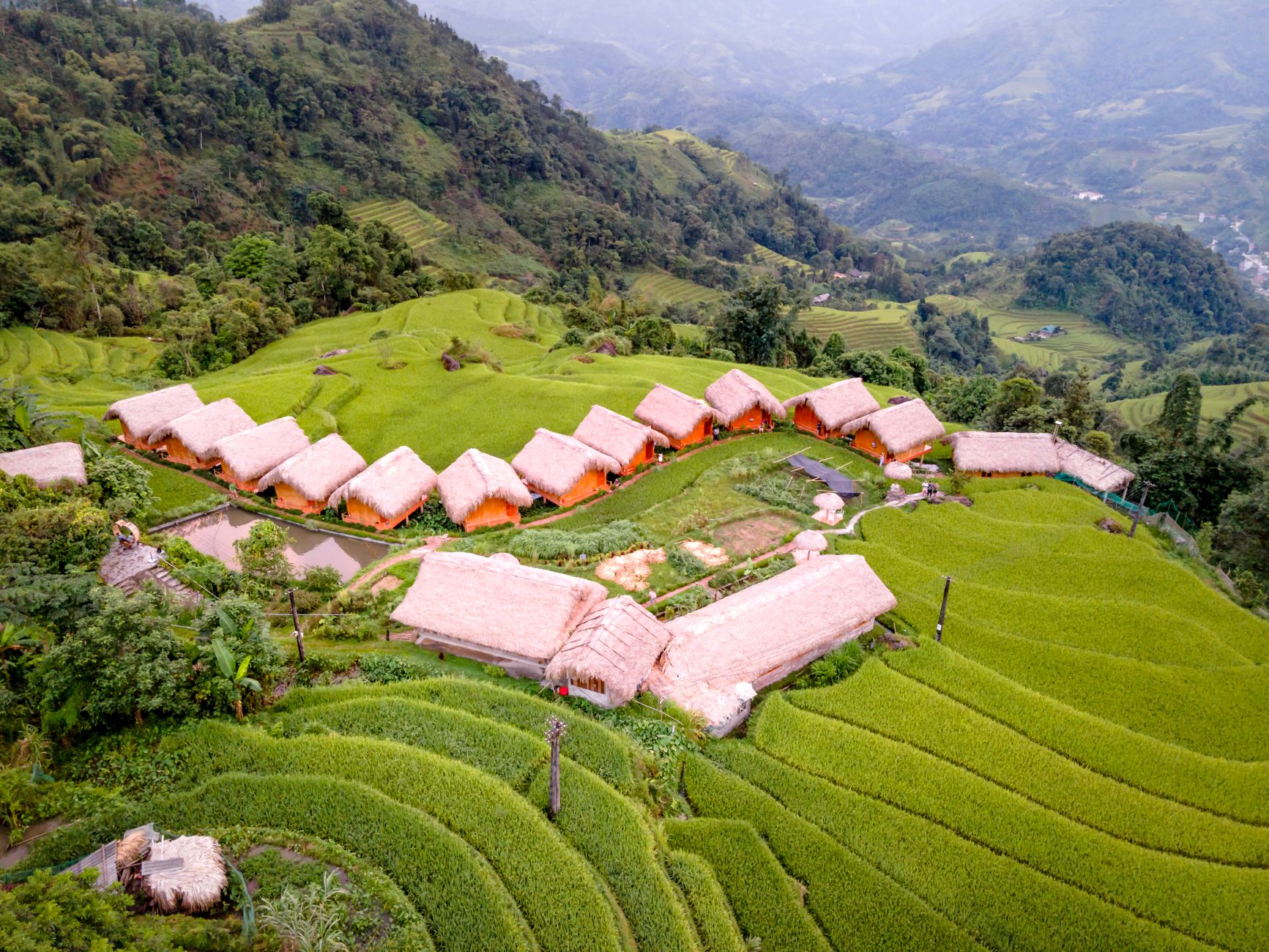
Photo by Quang Nguyen Vinh on Pexels
Homestays in the villages: the real immersion
If you're comfortable with basic conditions — squat toilets, shared bathrooms, no hot water in winter — homestays in Ban Hieu, Buon, or Kho Muong run 400,000–700,000 VND ($15–30) per night, often including a simple dinner and breakfast cooked by your host family. You eat with them, sit on plastic chairs in the kitchen, answer questions about your country in broken English or French. Children will stare at you until they get bored. An old woman will offer you tea and won't take money for it.
The standard route: walk into a village, ask at a small shop or ask your guide (if you have one) to introduce you to a family. Homestay signs in English are now appearing, but the best experiences come from word-of-mouth introductions rather than booking-app reservations. Expect 1–2 rooms available per family, often with a shared shower and a toilet that flushes if you pour a bucket of water into it.
Stay in Ban Hieu if you want proximity to the valley's most photographed terraces. Kho Muong is quieter, deeper into the hills, and the terraces are less "manicured." Buon is a middle ground — good access to walks, enough homestay inventory that you don't have to beg to find a bed.
Logistics and booking
Pu Luong Retreat can be reached via email or through booking platforms (Airbnb, Booking.com); they respond slowly but they respond. Pu Luong Eco-Garden is also on these platforms but is easier to reach via email or a direct message to their Facebook page. For homestays, booking apps show a few options, but they often charge commissions that the families don't see. Better: contact the Pu Luong homestay cooperative through the tourist information point in Thanh Hoa town, or ask your guide or hostel in Hanoi (하노이 / 河内 / ハノイ) to call ahead.
Getting there: from Hanoi, take a minibus to Thanh Hoa (2–3 hours, around 120,000 VND / $5), then a shared taxi or rented motorbike to Pu Luong town (45 minutes, another 100,000–200,000 VND / $4–8). Many travelers book a tour from Hanoi that includes transport and a homestay; prices are usually 2–3 million VND ($80–120) for 2–3 days, which includes meals and a guide. It's less intimate than showing up solo, but if you're on a tight schedule or uncomfortable navigating alone, it's reasonable.

Photo by Quang Nguyen Vinh on Pexels
Timing and seasons
May to October (monsoon season) brings wet mornings and lush greens; terraces are full of water and the light is moody. November to April is dry and clearer; October is the sweet spot — some water left in the paddies, but the sun is reliable. July and August are very humid, and some homestays close if owners go back to the cities for work.
Book lodges in advance (2–3 weeks) during October and the Tet holiday (January–February). Off-season (June, September, January) you can often walk in and find a bed the same day.
Bottom line
Pu Luong isn't fully "undiscovered" anymore, but it's honest in a way many Vietnamese tourist destinations have stopped being. If you want rice terraces, local food, and the temporary loneliness of a quiet place, it's worth the slow journey from Hanoi. Stay in a homestay for at least one night; the eco-lodges are fine for comfort, but the villages are the actual reason you came.
Going to Vietnam? Eat and travel smarter.
Monthly: new dishes, off-the-beaten-path destinations, and itineraries — straight to your inbox. No spam. Unsubscribe anytime.
Join 0 expats. (We just launched.)
More from Northern Vietnam
Other articles covering the same region.

Hoa Lu Ancient Capital: Vietnam's First Kingdom and How to Visit from Ninh Binh
Hoa Lu was Vietnam's first royal capital, and the two temple complexes that survive are among the most atmospheric historical sites in the north.

Hoan Kiem Lake: The Sword Legend, Ngoc Son Temple, and When to Visit
Hoan Kiem Lake sits at the center of Hanoi's Old Quarter — here's the legend behind it, how to walk it properly, and when the streets actually belong to you.

Lung Cu Flag Tower: Vietnam's Northernmost Point
The drive to Lung Cu Flag Tower takes you to Vietnam's northernmost point at 1,500 metres. It's a half-day trip from Dong Van with a steep climb, mountain views, and nearby Hmong villages.
More in Travel Tips
More articles from the same category.

Bargaining in Vietnam: When to haggle, when to pay the asking price
Haggling is normal at markets and with cyclos, but not everywhere. Learn which settings expect negotiation, how much to push back, and where to just hand over your money.
Best Vietnam eSIM Providers 2026: Costs, Setup, and Real-World Tips
A practical breakdown of Vietnam's top eSIM options, real prices, and how to avoid common pitfalls when arriving with no local SIM.

Where to Stay in Saigon: District 1 vs District 3 vs District 7
Three neighborhoods, three vibes. Pick District 1 for backpackers and chaos, District 3 for quiet and value, or District 7 for modern expat comfort. Here's how each stacks up.

Where to Stay in Sapa: Town Center vs Cat Cat vs Ta Van
Sapa has three distinct bases: the foggy town center for convenience, Cat Cat village for quiet hilltop views, or Ta Van for homestay immersion. Pick based on whether you're chasing comfort or trekking.

Where to Stay in Can Tho: Ninh Kieu, Cai Rang, or Orchards
Can Tho's three main neighborhoods offer different angles on Mekong Delta life. Here's how to pick based on your priorities and budget.

Where to Stay in Hue: Citadel vs South Bank vs Beach
Hue splits into three distinct neighborhoods for travelers. Each offers different trade-offs between history access, dining, and atmosphere—here's how to choose.
Comments
Loading…