Getting from Da Nang to Hoi An: Taxi, Bus, Motorbike & Walking
The 30 km between Da Nang and Hoi An is simple to navigate. Here's how to choose based on budget, time, and what you want to see along the way.

The short answer
Da Nang and Hoi An are 30 km apart — about 45 minutes to an hour depending on traffic and your transport choice. You have five realistic options, and the best one depends on whether you prioritize speed, cost, or flexibility.
Grab or taxi (fastest, most comfortable)
A Grab ride from central Da Nang (다낭 / 岘港 / ダナン) to central Hoi An costs 200,000–300,000 VND and takes 30–40 minutes in light traffic. During peak hours (7–9 a.m., 5–7 p.m.), expect 50 minutes or longer.
Grab is more reliable than street taxis in Da Nang. The app shows the fare upfront, the driver is rated, and you avoid meter disputes. Most drivers speak basic English or can read your destination from the app. Book it from your phone — download the Grab app before arrival or use it via WeChat/Alipay if you have those.
Taxis work fine too. Grab the white or pink taxis from a taxi stand (at your hotel, the airport, or the beach promenade). Agree on the fare or insist the meter runs. Expect the same 200k–300k range.
Best for: business travelers, families with luggage, anyone tired or in a hurry.
Yellow public bus #1 (cheapest)
The public bus from Da Nang to Hoi An (호이안 / 会安 / ホイアン) is line #1 (marked in Vietnamese and English). It runs from Da Nang's central bus station (roughly 2 km west of the city center) and stops in Hoi An's south side, near the market.
Fare: 30,000 VND. Journey time: 50–70 minutes, depending on stops and traffic.
To use it: find your way to the Da Nang bus station (ask your hotel for directions), buy a ticket from the window, and board. Buses run frequently throughout the day, roughly every 15–30 minutes during daylight. The bus is crowded during rush hours but doable. Air conditioning works, though don't expect a smooth ride on the coastal highway.
Best for: budget travelers, backpackers, anyone without a deadline.
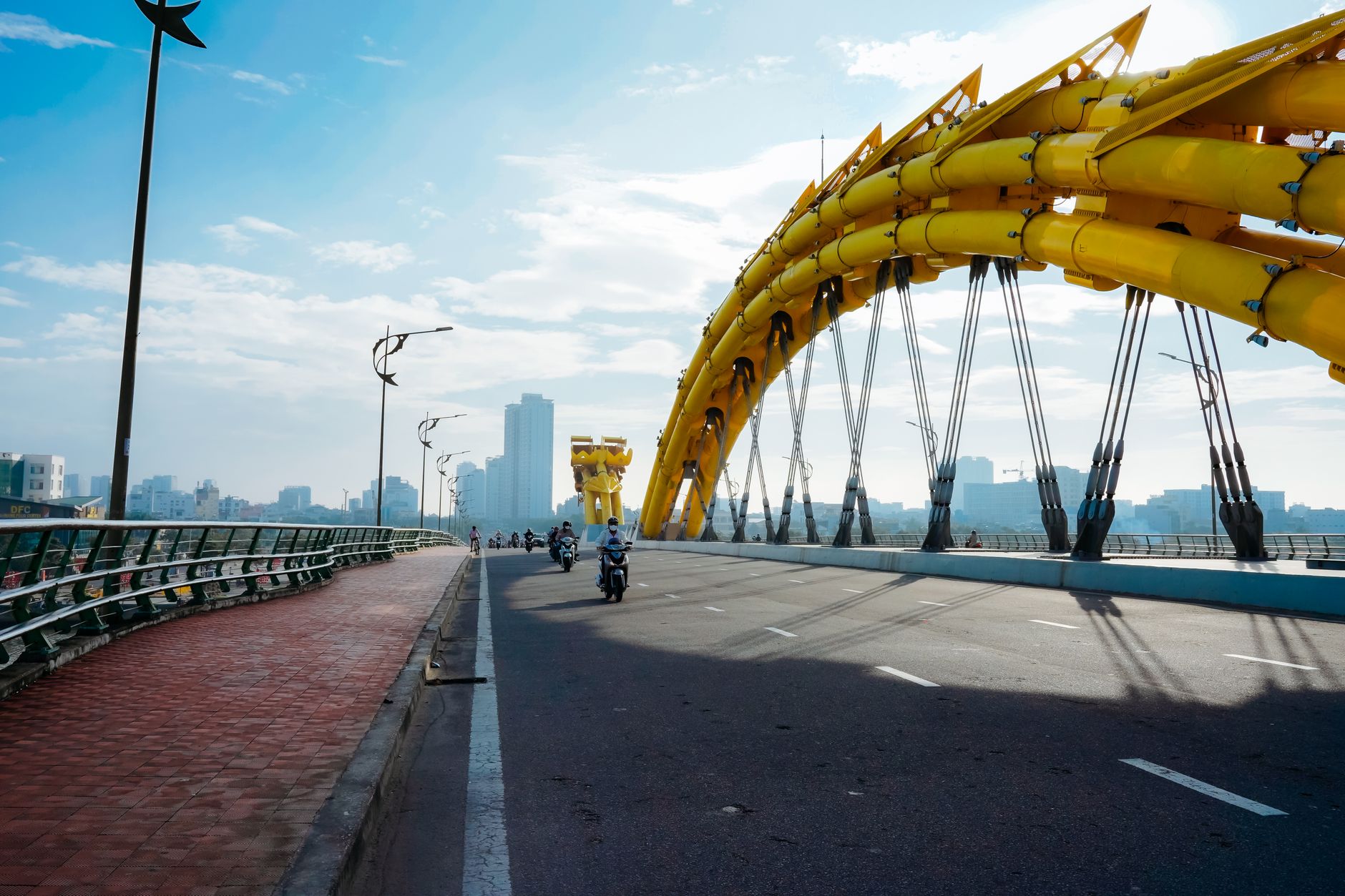
Photo by Xuân Thống Trần on Pexels
Motorbike rental (most flexible)
Rent a motorbike from any hotel, tour operator, or rental shop in Da Nang for 150,000–250,000 VND per day. The ride to Hoi An takes 40–50 minutes on Highway 1 or the scenic coastal route if you're not in a rush.
You'll pass through Marble Mountains (Ngu Hanh Son) and fishing villages on the way. If you want to stop, photograph, or detour to a beach, a motorbike lets you do that without waiting for a bus or paying extra for a taxi.
Practical notes: You need an International Driving Permit (IDP) or a Vietnamese motorbike license — though in practice, many tourists ride with just a passport. Wear a helmet (legally required, and smart). Drive on the left side of the road. Fuel costs about 20,000 VND per liter; a 30 km trip uses roughly 1 liter.
Best for: adventurous travelers, photographers, people who want independence.
Cycling (doable but long)
Cycling 30 km from Da Nang to Hoi An is possible but not recommended for most visitors. The coastal highway (Highway 1) has traffic, and there's no dedicated bike lane for the whole route. A few tour operators offer guided cycle tours that avoid the main road and include stops at villages and attractions.
Self-guided cycling: rent a bike from your hotel or a rental shop (30,000–80,000 VND per day), and aim for early morning to avoid midday heat and afternoon traffic. You'll add 2–3 hours to your journey if you're an average cyclist and want to stay safe.
Best for: fit cyclists, travelers who have extra time, anyone seeking an unconventional experience.
Photo by Lê Quốc Hùng on Pexels
Walking (not realistic)
Walking 30 km in tropical heat with luggage is not practical. The road is busy, sidewalks are inconsistent, and you'll be exhausted. Skip this unless you're doing a very short, local walk within Da Nang or Hoi An itself.
Choosing your transport
Speed matters: Grab or taxi, 30–40 minutes.
Budget is tight: Public bus #1, 30,000 VND.
You want to explore: Motorbike, 40–50 minutes plus stops.
You have time and fitness: Guided cycle tour, 3–4 hours.
Practical notes
Hi Vân Pass (the mountain between Da Nang and Hoi An) is on most routes. Roads are well-maintained. Expect standard Southeast Asian traffic — horns, honking, and motorbikes weaving. Travel during daylight if possible, especially if driving yourself. Most hotels in either city can book transport for you; it's convenient but often more expensive than booking direct via Grab or renting independently.
Going to Vietnam? Eat and travel smarter.
Monthly: new dishes, off-the-beaten-path destinations, and itineraries — straight to your inbox. No spam. Unsubscribe anytime.
Join 0 expats. (We just launched.)
More from Da Nang
Other articles covering this city.

Best Banh Canh Ca in Da Nang: Where Locals Send You
Da Nang's version of "banh canh ca" — thick tapioca noodles in crab broth — tastes different from Hanoi or Saigon. Here's where locals actually eat it, what to order, and why timing matters.

Best Banh Xeo in Da Nang: Where Locals Send You
Crispy "banh xeo" pancakes in Da Nang are thinner and more delicate than the southern versions, with a lighter turmeric bite. Here's where locals actually eat them.

Vietnamese Cooking Classes: Hanoi vs Hoi An vs Saigon
Three cities, three distinct approaches to learning Vietnamese food. Here's what to expect, what you'll actually cook, and which one fits your style.
More from Central Vietnam
Other articles covering the same region.

Son Doong Cave: Inside the $3,000 Oxalis Expedition
Son Doong is the world's largest cave by volume—and the only way in is a 4-day permit-exclusive tour with Oxalis. Here's what you actually get, who should go, and what cheaper caves offer instead.

Phong Nha Cave: Boat Tours, Dry Caves, and How to Choose
Phong Nha-Ke Bang has two main cave experiences: the iconic river boat through Phong Nha Cave itself, and the dry trek into Tien Son. Here's how to pick, what to expect, and when to go.

Thien Mu Pagoda in Hue: Seven Stories Above the Perfume River
Hue's most recognizable landmark rises 21 metres above the Perfume River. This is the story behind the tower, how to get there, and when to visit without the tour groups.
More in Travel Tips
More articles from the same category.

Bargaining in Vietnam: When to haggle, when to pay the asking price
Haggling is normal at markets and with cyclos, but not everywhere. Learn which settings expect negotiation, how much to push back, and where to just hand over your money.
Best Vietnam eSIM Providers 2026: Costs, Setup, and Real-World Tips
A practical breakdown of Vietnam's top eSIM options, real prices, and how to avoid common pitfalls when arriving with no local SIM.

Where to Stay in Saigon: District 1 vs District 3 vs District 7
Three neighborhoods, three vibes. Pick District 1 for backpackers and chaos, District 3 for quiet and value, or District 7 for modern expat comfort. Here's how each stacks up.

Where to Stay in Sapa: Town Center vs Cat Cat vs Ta Van
Sapa has three distinct bases: the foggy town center for convenience, Cat Cat village for quiet hilltop views, or Ta Van for homestay immersion. Pick based on whether you're chasing comfort or trekking.

Where to Stay in Can Tho: Ninh Kieu, Cai Rang, or Orchards
Can Tho's three main neighborhoods offer different angles on Mekong Delta life. Here's how to pick based on your priorities and budget.

Where to Stay in Hue: Citadel vs South Bank vs Beach
Hue splits into three distinct neighborhoods for travelers. Each offers different trade-offs between history access, dining, and atmosphere—here's how to choose.
Comments
Loading…