Nam Dinh: What to Eat — a Traveler's Guide
Nam Dinh's food scene is built on river deltas and salt marshes. Learn the regional dishes locals actually eat, where to find them, and what to avoid.

Nam Dinh sits where the Red River meets the Gulf of Tonkin, and that geography shapes everything on the plate — freshwater fish, shrimp from tidal marshes, sticky rice, and a flavor profile that feels distinct from Hanoi even though the city is only 90 km south. Most travelers skip it entirely. That's partly why the food here hasn't been flattened by Instagram catering.
The core flavors
Nam Dinh cooking relies on three ingredients: fish (freshwater and salt), rice, and "mam tom" — a pungent shrimp paste that smells like low tide and tastes like umami concentrate. Locals eat it with rice, vegetables, and grilled fish. Tourists either love it or spend the next hour regretting. Expect it everywhere, especially in family meals and street stalls.
Unlike Hanoi, where you can find any regional Vietnamese cuisine, Nam Dinh is resolutely local. That's the point. The food tastes less refined than city cuisine and more honest — less garnish, more salt, fewer herbs. It works.
Must-eat dishes
Com tam (broken rice) is the baseline breakfast and lunch. Vendors sell it from small plastic stools on street corners, costing around 25,000–35,000 VND per bowl. Get it with "ca roti" (grilled fish), a fried egg, and pickled vegetables. The rice grains are intentionally fractured (a byproduct of milling), which makes them stickier and absorb sauce better than whole grains.
Bun oc (snail and rice noodles) is a Nam Dinh signature. Small, freshwater snails are simmered in a broth spiked with shrimp paste and spices, served over thin noodles with fresh herbs and fried shallots. A bowl runs 30,000–45,000 VND. The snails can be chewy if overcooked; go early (before 9 a.m.) when they're still tender. Any vendor near the Old Market (Cho Lon) on Tran Hung Dao Street will have it.
Cha ca (turmeric and dill fish cakes) is a lighter, less famous cousin of the Hanoi "ca» version. Nam Dinh versions skip the heavy sauce and let turmeric and fresh dill dominate. You'll find stalls selling preformed cakes for 40,000–60,000 VND per portion; you can eat them grilled or fried. There's no single famous spot — just ask a local near any market.
Banh cuon (rolled rice pancakes) filled with pork and mushroom are sold from carts outside Pho Hoa Temple, usually between 6–8 a.m. for 20,000–25,000 VND. They're served with a light dipping sauce and are best eaten warm. After 9 a.m., they're gone.
Bun rieu (crab and tomato noodle soup) is everywhere in Nam Dinh and tastes richer here than in the north — local vendors use more crab paste and fresh crab meat instead of just powder. A bowl costs 35,000–50,000 VND. The broth is the point; the noodles are secondary.
Mam tom on rice with grilled fish is what you eat at a family table, not tourist restaurants. Ask a guesthouse owner to point you to a simple "com" stall (rice shop) near their place. 30,000–40,000 VND for a full meal (rice, fish, vegetables, shrimp paste, soup). The smell is part of the experience.
Where locals eat
Skip the tourist restaurants around Tran Hung Dao Street and Ly Thai To Street. They're safe but bland.
Cho Lon (Old Market) is the heart of food in Nam Dinh. It opens at dawn and winds down by 10 a.m. for breakfast; vendors return for lunch from 11 a.m.–2 p.m. Go in the morning. Expect crowds, plastic stools, no English menus, and no tourists. It's chaotic and worth it. Most stalls inside cost 20,000–40,000 VND per meal.
Van Mieu Street (near Van Mieu Pagoda) has a row of simple rice-and-fish vendors. These are neighborhood spots where families eat daily. No signage, no frills, no prices posted — you'll point at what you want and they'll tell you the cost (usually honest). Go between 11 a.m.–1 p.m.
Pho Hao Alley (a narrow lane between Ly Thai To and Tran Hung Dao) has five or six vendor stalls selling regional noodle soup. It's a locals-only zone that tourists rarely find. Prices are 30,000–40,000 VND. Ask for directions at your hotel; it's easy to miss.
Night markets open around 5 p.m. near the Central Post Office (Tran Hung Dao and Ly Thai To intersection). You'll find grilled fish, skewered offal, sticky rice, and drinks. A full meal with beer costs 60,000–100,000 VND. It's touristy-adjacent but still dominated by locals. Go after 6 p.m.

Photo by FOX ^.ᆽ.^= ∫ on Pexels
Coffee and drinks
Nam Dinh coffee is standard Vietnamese "ca phe sua da" (iced coffee with sweetened condensed milk), served at small stalls for 15,000–20,000 VND. There's no specialty coffee culture here. If you need good espresso, you're in the wrong city.
Beer is omnipresent. Bia Sai Gon and Bia Ha Noi dominate. A draft "bia hoi" (fresh beer) costs 10,000–15,000 VND per glass at small bars. Street stalls selling beer and grilled offal open at dusk. A meal with several beers and snacks runs 100,000–150,000 VND for two people.
Cost expectations
- Street stall meal (rice, fish, soup): 25,000–50,000 VND
- Noodle soup (bun rieu, bun oc): 30,000–50,000 VND
- Grilled fish, whole: 100,000–200,000 VND
- Market breakfast (com tam with sides): 40,000–60,000 VND
- Beer, per glass (bia hoi): 10,000–15,000 VND
- Full evening meal with beer (two people): 150,000–250,000 VND
There are no high-end restaurants worth your time. Nam Dinh's food value is in volume and authenticity, not ambiance.
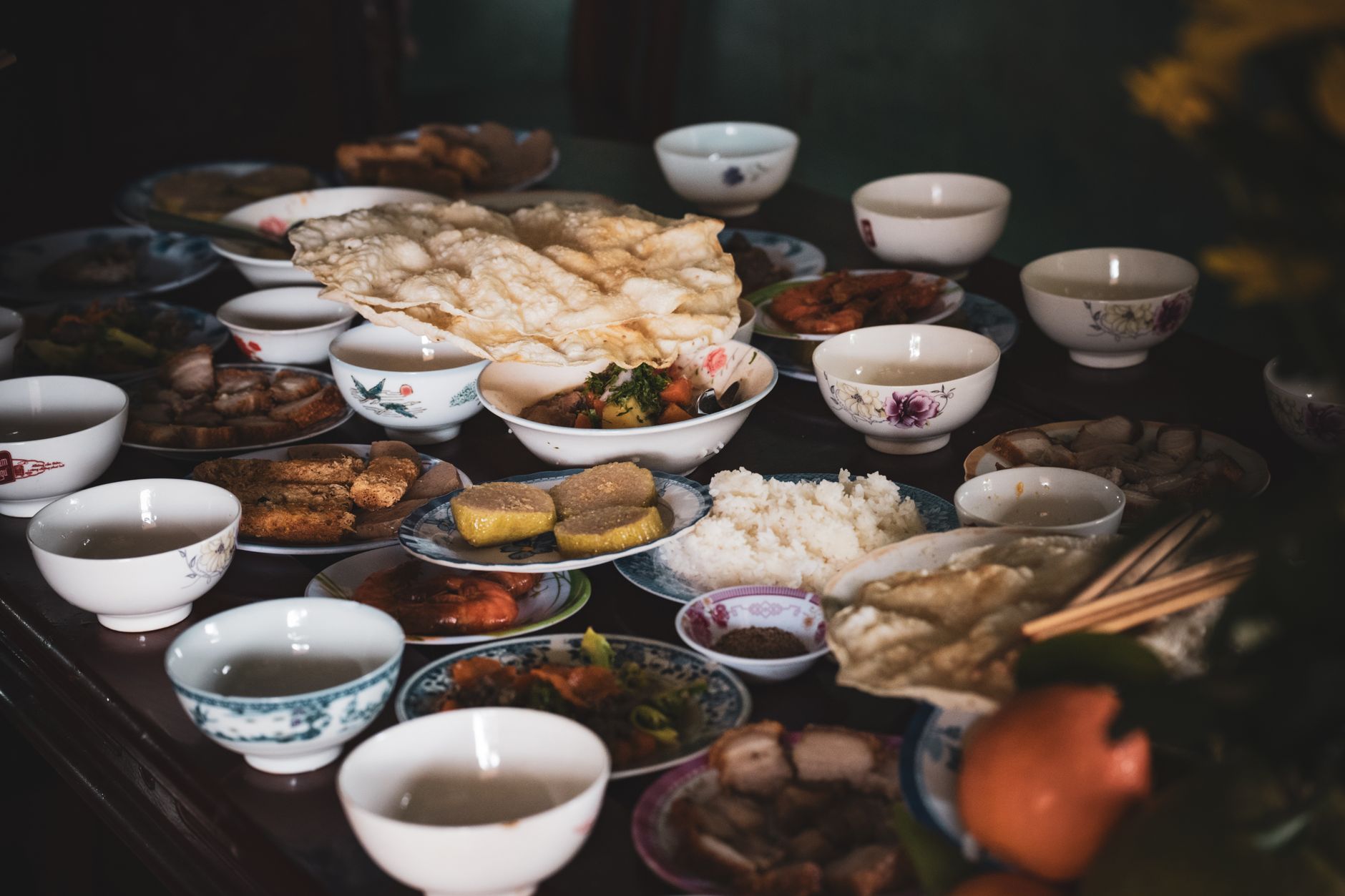
Photo by Vuong on Pexels
What to avoid
Don't eat fish from street stalls after noon — the heat spoils them fast, and refrigeration is sparse. Stick to morning and evening.
Avoid "tourist" restaurants on Tran Hung Dao Street with laminated photos and English menus. They're expensive (60,000–100,000 VND per dish) and flavorless. The food is reheated and watered down.
Don't order seafood you can't see being prepared. Nam Dinh's river and coastal access is good, but food safety isn't guaranteed in unlicensed stalls. Stick to busy vendors where turnover is high.
Mam tom is polarizing. If you don't like the smell on first encounter, it won't grow on you in one meal. Skip it if it's not for you; there's plenty else to eat.
Practical notes
Most vendors don't speak English. Learn basic food words or use Google Translate on your phone. Bring small bills — many stalls don't have change for large notes. Eat early (breakfast before 8:30 a.m., lunch before 1:30 p.m.); most vendors close after their rush. Nam Dinh is best visited as a day trip from Hanoi or a stopover en route to Ha Long; staying overnight gives you access to quiet evening meals and night markets without tourist crowds.
The city has no food tours or guide services geared to travelers. That's fine. Ask locals, wander markets, point at food, eat. It works.
Going to Vietnam? Eat and travel smarter.
Monthly: new dishes, off-the-beaten-path destinations, and itineraries — straight to your inbox. No spam. Unsubscribe anytime.
Join 0 expats. (We just launched.)
More from nam-dinh
Other articles covering this city.

How to Get to Nam Dinh: Your Transport Guide
Nam Dinh is Vietnam's oldest city and a quiet alternative to crowded northern circuits. Here's how to reach it from Hanoi, Saigon, and other hubs by bus, train, or motorbike.

Nam Dinh: Pho's Birthplace and Red River Delta Culture
Nam Dinh province in northern Vietnam claims the birthplace of "pho" and has shaped Vietnamese history for centuries. Explore the region's geography, climate, and cultural heritage.

Pho: Vietnam's National Noodle Soup — Origins, Broth Secrets, Nutrition
Flat rice noodles, bone broth simmered 12+ hours, beef or chicken, fresh herbs. How "pho" became Vietnam's breakfast staple and what makes a good bowl.
More from Northern Vietnam
Other articles covering the same region.

Hoa Lu Ancient Capital: Vietnam's First Kingdom and How to Visit from Ninh Binh
Hoa Lu was Vietnam's first royal capital, and the two temple complexes that survive are among the most atmospheric historical sites in the north.

Hoan Kiem Lake: The Sword Legend, Ngoc Son Temple, and When to Visit
Hoan Kiem Lake sits at the center of Hanoi's Old Quarter — here's the legend behind it, how to walk it properly, and when the streets actually belong to you.

Lung Cu Flag Tower: Vietnam's Northernmost Point
The drive to Lung Cu Flag Tower takes you to Vietnam's northernmost point at 1,500 metres. It's a half-day trip from Dong Van with a steep climb, mountain views, and nearby Hmong villages.
More in Destinations
More articles from the same category.

Landmark 81 Saigon: Observation Deck, Ice Rink, and Getting There from District 1
Landmark 81 is Vietnam's tallest building and Saigon's most visible skyline anchor. Here's what's actually inside and whether it's worth the trip.

Bitexco Financial Tower: Skydeck, Helipad Bar, and Whether the Ticket Is Worth It
Saigon's most recognizable skyscraper charges 250,000 VND to ride up to the 49th floor — here's what you actually see, and whether you should bother.

Notre Dame Cathedral Saigon: French Colonial Centerpiece in the Heart of HCMC
Saigon's Notre Dame Cathedral has been wrapped in scaffolding for years, but the square in front of it remains one of the best starting points for a colonial-era walking tour of District 1.

Paradise Cave, Quang Binh: The 31km Marble Cave That Beats Phong Nha for Photographers
Paradise Cave runs 31km through Quang Binh's karst and delivers the kind of cathedral-scale formations that Phong Nha's boat tour simply can't match. Here's how to see it properly.

Son Doong Cave: What the $3,000 Oxalis Expedition Actually Includes
Son Doong is the world's largest cave and only one operator is legally allowed to take you inside. Here is what the permit-only expedition covers and whether it is worth it.

Phong Nha Cave: Wet Cave, Dry Cave, and How to Choose
Phong Nha has two main caves worth your time — one you reach by river boat, one on foot. Here's how to pick, what each costs, and when to go.
Comments
Loading…