Where to Stay in Nam Dinh: Budget to Mid-Range Options for North Vietnam
Nam Dinh is quieter than Hanoi but still has decent guesthouses and hotels. Here's what neighborhoods offer and which properties suit different budgets.

Nam Dinh—the capital of Nam Dinh Province in the Red River Delta—is not a major tourist hub, which means fewer glitzy hotels but also less tourist markup. Most visitors pass through on the way to Phu Ly or Ninh Binh, or they're doing family business. But if you're staying a night or two, the city has workable budget and mid-range options spread across a few neighborhoods worth knowing about.
Pho Hue District: The City Center
Pho Hue is Nam Dinh's main business and commercial spine. It's where you'll find the biggest concentration of hotels, most of them mid-range chains and older three-star properties. Prices tend to run 300,000–600,000 VND (USD 12–24) for a decent double with air conditioning and hot water.
Why stay here: proximity to restaurants, banks, the main market (around Dong Xuan area on the city's eastern flank), and transport hubs. It's walkable, and you're never far from a place to eat. Downside: noisier than quieter neighborhoods, with motorbike traffic and street vendors from early morning.
Giang Vo Ward: Quieter Residential Fringe
Giang Vo lies just north of Pho Hue and skews more residential. A handful of family-run guesthouses and small hotels cluster here, catering to business travelers and the occasional tourist. Rates are similar to central—300,000–500,000 VND for a basic room—but you get more peace. Streets are wider, less congested.
Why stay here: if you want to sleep without motorbike honking at 6 a.m., this is better. Still close enough to walk to central restaurants. A few local "pho" joints and rice-noodle shops nearby. It feels more like Nam Dinh as locals live it, less touristy theater.
Hai Ba Trung District: East Side, Near the Water
Hai Ba Trung sprawls eastward toward the Red River and Day River confluence. It's where Nam Dinh's museum and some older colonial-era buildings survive. Hotels here are sparse, mostly budget guesthouses in the 250,000–400,000 VND range. If you find them, they tend to be run-down but clean and honest.
Why stay here: if you're interested in heritage walks or cycling along the river levees, this is your base. Otherwise, there's less dining variety than Pho Hue.
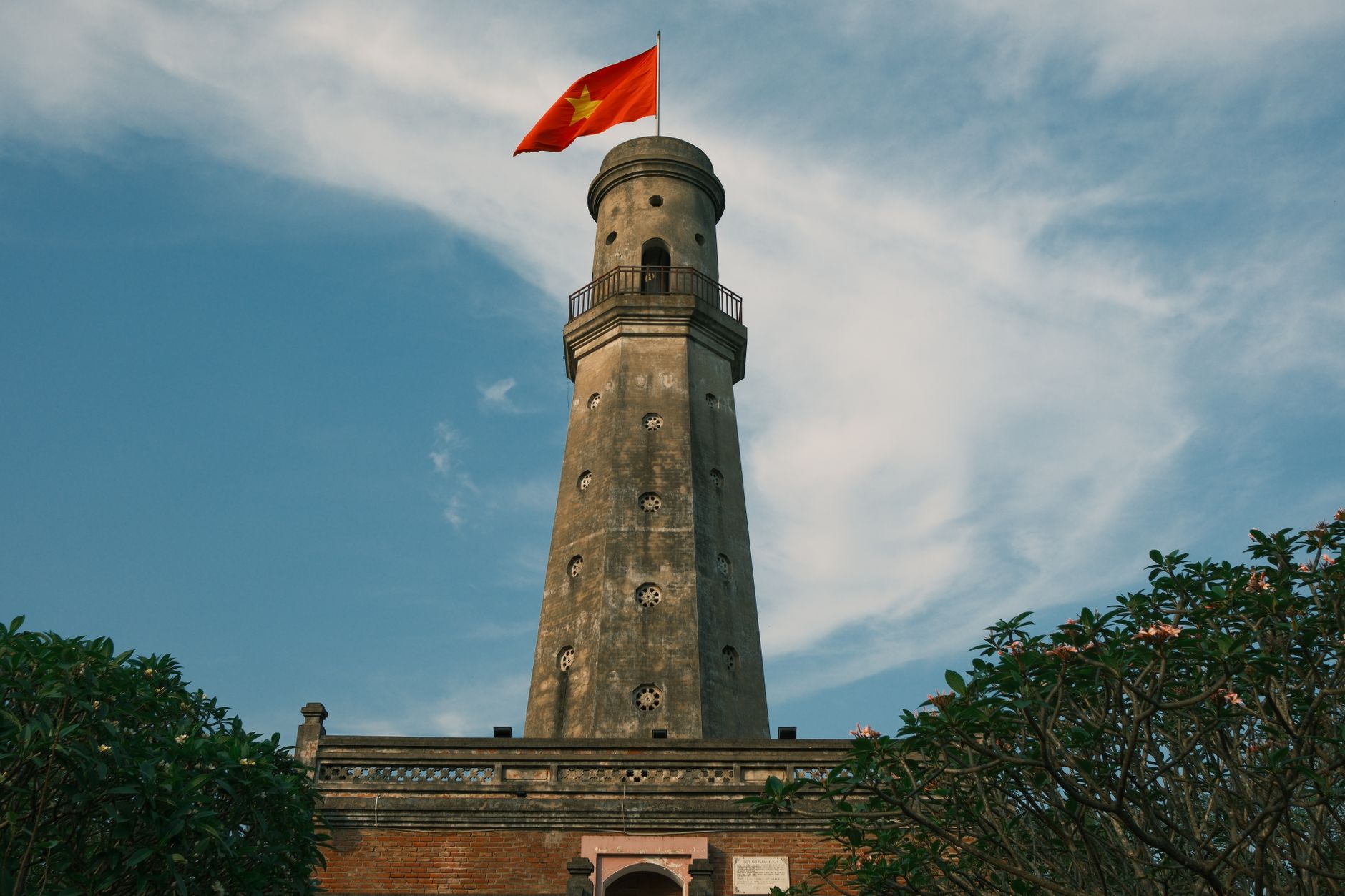
Photo by Thuan Pham on Pexels
Budget Digs: What 250,000–350,000 VND Gets You
At this price (USD 10–14 per night), expect a small room, basic bathroom (sometimes a squat toilet, sometimes Western), a ceiling fan or weak air conditioning, and a bed. Breakfasts are usually included—congee, bread, maybe an egg. Wi-Fi is spotty but usually available. Many of these places are family-run guesthouses with no English-speaking staff; pointing at your phone and a smile works fine. Popular ultra-budget spots include older converted townhouses in Pho Hue—clean but no frills.
Mid-Range Hotels: 500,000–900,000 VND
For USD 20–35, you get a proper hotel: private bathroom with hot shower, decent air conditioning, a small desk, maybe a small TV. Some offer breakfast, some don't. Service is friendlier and staff usually speak some English. Two- and three-star chains like Nam Dinh Hotel, Thien Trang Hotel, and Thanh Lam Hotel occupy this tier. Rooms are clean, reliable, and forgettable in the best way—no surprises, works fine for one or two nights.
Why pick mid-range: if you're staying two nights and want a reliable shower and decent bed, this is the sweet spot. Most are still in or near Pho Hue for convenience.
Photo by Thuan Pham on Pexels
Luxury: Basically Doesn't Exist
Nam Dinh has no five-star hotels, no resort spa, no rooftop bar. The highest tier is a few four-star business hotels around 1,000,000–1,500,000 VND (USD 40–60), with decent views, a restaurant, air-con that works, and a bit of character. If you're serious about comfort, consider staying in Ninh Binh (45 km south) or returning to Hanoi (87 km north). The drive is easy, and you'll sleep better.
Practical Notes
Book ahead only if visiting during Tet or a local festival; otherwise, just show up. Many guesthouses don't have websites—ask at a restaurant or the bus station where travelers stay. Expect to pay in cash (VND); credit cards work at mid-range hotels but not budget guesthouses. The city has no dedicated backpacker quarter, so there's no "tourist ghetto" vibe—you're just in a regular town.
Nam Dinh is best as a one-night stop, not a destination in itself. Use it to access Phu Ly's silk weaving workshops or as a jumping-off point for Ninh Binh's karst landscape and ""cao lau"" and ""banh canh"" specialties to the south.
Going to Vietnam? Eat and travel smarter.
Monthly: new dishes, off-the-beaten-path destinations, and itineraries — straight to your inbox. No spam. Unsubscribe anytime.
Join 0 expats. (We just launched.)
More from nam-dinh
Other articles covering this city.

How to Get to Nam Dinh: Your Transport Guide
Nam Dinh is Vietnam's oldest city and a quiet alternative to crowded northern circuits. Here's how to reach it from Hanoi, Saigon, and other hubs by bus, train, or motorbike.

Nam Dinh: Pho's Birthplace and Red River Delta Culture
Nam Dinh province in northern Vietnam claims the birthplace of "pho" and has shaped Vietnamese history for centuries. Explore the region's geography, climate, and cultural heritage.

Pho: Vietnam's National Noodle Soup — Origins, Broth Secrets, Nutrition
Flat rice noodles, bone broth simmered 12+ hours, beef or chicken, fresh herbs. How "pho" became Vietnam's breakfast staple and what makes a good bowl.
More from Northern Vietnam
Other articles covering the same region.

Hoa Lu Ancient Capital: Vietnam's First Kingdom and How to Visit from Ninh Binh
Hoa Lu was Vietnam's first royal capital, and the two temple complexes that survive are among the most atmospheric historical sites in the north.

Hoan Kiem Lake: The Sword Legend, Ngoc Son Temple, and When to Visit
Hoan Kiem Lake sits at the center of Hanoi's Old Quarter — here's the legend behind it, how to walk it properly, and when the streets actually belong to you.

Lung Cu Flag Tower: Vietnam's Northernmost Point
The drive to Lung Cu Flag Tower takes you to Vietnam's northernmost point at 1,500 metres. It's a half-day trip from Dong Van with a steep climb, mountain views, and nearby Hmong villages.
More in Destinations
More articles from the same category.

Landmark 81 Saigon: Observation Deck, Ice Rink, and Getting There from District 1
Landmark 81 is Vietnam's tallest building and Saigon's most visible skyline anchor. Here's what's actually inside and whether it's worth the trip.

Bitexco Financial Tower: Skydeck, Helipad Bar, and Whether the Ticket Is Worth It
Saigon's most recognizable skyscraper charges 250,000 VND to ride up to the 49th floor — here's what you actually see, and whether you should bother.

Notre Dame Cathedral Saigon: French Colonial Centerpiece in the Heart of HCMC
Saigon's Notre Dame Cathedral has been wrapped in scaffolding for years, but the square in front of it remains one of the best starting points for a colonial-era walking tour of District 1.

Paradise Cave, Quang Binh: The 31km Marble Cave That Beats Phong Nha for Photographers
Paradise Cave runs 31km through Quang Binh's karst and delivers the kind of cathedral-scale formations that Phong Nha's boat tour simply can't match. Here's how to see it properly.

Son Doong Cave: What the $3,000 Oxalis Expedition Actually Includes
Son Doong is the world's largest cave and only one operator is legally allowed to take you inside. Here is what the permit-only expedition covers and whether it is worth it.

Phong Nha Cave: Wet Cave, Dry Cave, and How to Choose
Phong Nha has two main caves worth your time — one you reach by river boat, one on foot. Here's how to pick, what each costs, and when to go.
Comments
Loading…